- lifeboats carried
- wireless installed
- warnings received
PictLens visual explainer / Maritime safety
The Titanic Was Legal. That Was the Problem.
First viewport
Legal on paper. Not safe enough at sea.
- not enough places for everyone
- not everyone listening
- warnings did not change enough decisions
Core thesis supported by S7 and S8; later system changes supported by S3, S5, and S6.
Titanic was not only a shipwreck caused by an iceberg. It exposed a gap between official-looking safety rules and safety systems strong enough for the real emergency.
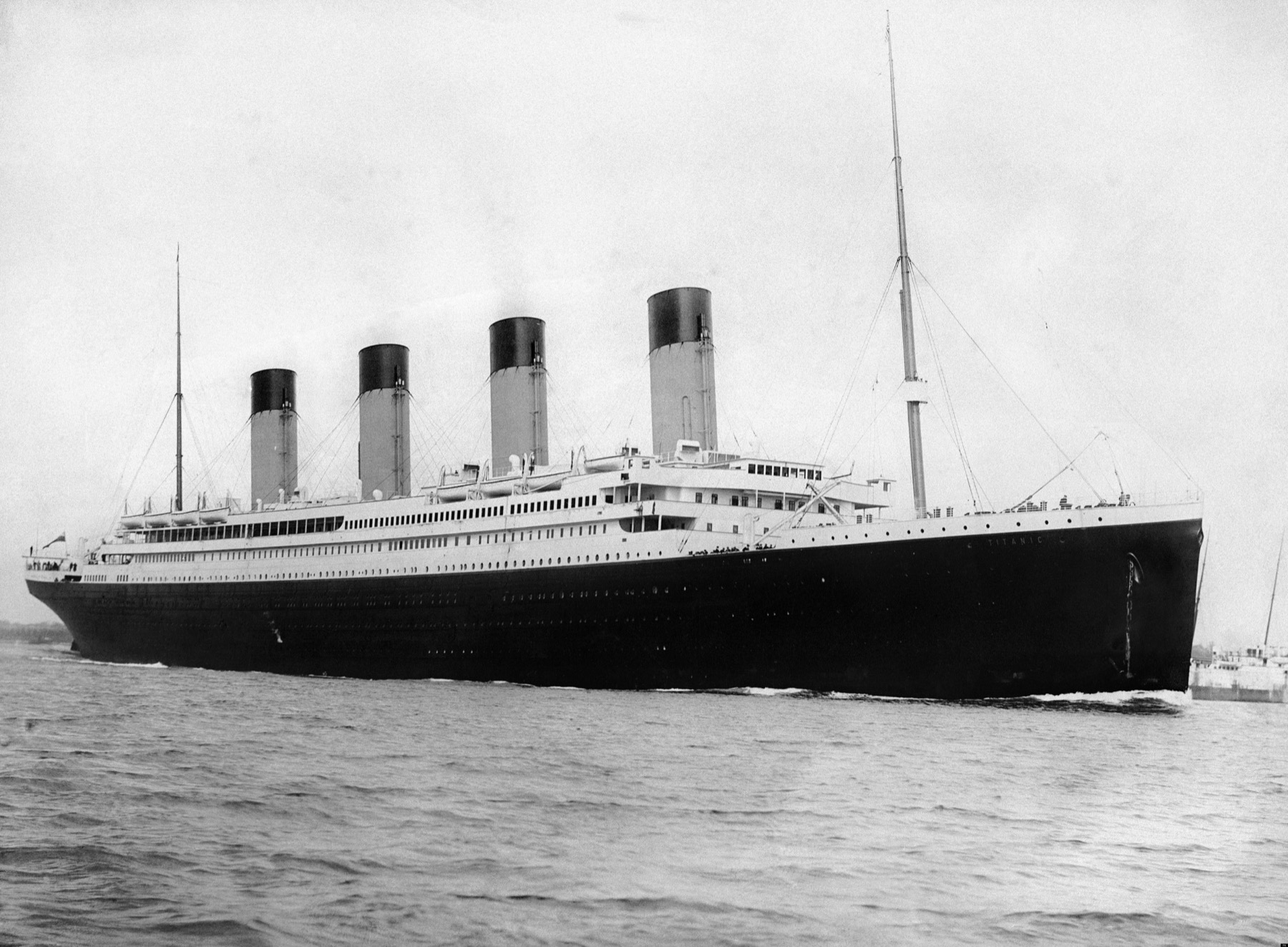

Everyone knows the short version of the Titanic story: a huge passenger ship crossed the Atlantic, hit an iceberg, and sank.
That version is true, but it is too small. The more unsettling part is that the ship looked modern, carried lifeboats, had wireless radio, received warnings, followed the safety logic of its time, and still failed the people on board.
In brief
Titanic was not only a maritime tragedy. It was a stress test for early twentieth-century safety thinking.
More than 1,500 people died, which is why the gap between legal compliance and real safety cannot be treated as a technical footnote. [S7]
The ship carried more lifeboats than the minimum required by the rules of the time, yet those boats could not carry everyone aboard. It had wireless radio, yet radio only became life-saving when someone heard the signal and a ship acted on it. It received ice warnings, yet warnings only matter if they change decisions. It had nearby ships in the North Atlantic, yet "nearby" did not mean ready to rescue. [S7][S8]
A safety rule can be legal and still be too weak for reality.
That truth is the bridge between Titanic's final night and the changes that followed: stronger lifeboat expectations, radio watchkeeping, ice patrol systems, and the international safety framework that became SOLAS. [S3][S5][S6]
Sen. William Alden Smith, after the U.S. investigation, warning that inquiry had to become regulation. [S1]
A ship built for a route, not a legend
Before Titanic became a symbol, it was a working passenger liner.
It belonged to the White Star Line and was built for the North Atlantic route between Europe and North America. That route was one of the great migration, business, and family corridors of the early twentieth century.
First-class passengers crossed in extraordinary comfort, but Titanic was not only a floating palace. Below the glamour were emigrants, workers, families, and people traveling toward a different life in America.
The ship left Southampton on April 10, 1912. It stopped first at Cherbourg in France, then at Queenstown in Ireland, now Cobh, before heading west into the North Atlantic toward New York. [S8]
- Southampton
- Cherbourg
- Queenstown / Cobh
- North Atlantic
- New York
A simplified view of the route from ports of call into the North Atlantic.
From disaster to rules
The disaster did not end in one night; it moved into rules.
-
Apr. 10, 1912
Titanic leaves Southampton
The liner sailed via Cherbourg and Queenstown toward New York.
Source: S7 / S8 -
Apr. 14, 1912, about 11:40 p.m.
Iceberg collision
Official and reference accounts center the collision and the speed maintained in ice conditions.
Source: S2 / S7 / S8 -
Early Apr. 15, 1912
Sinking and rescue
The ship sank, while Carpathia heard the distress call, raced toward the site, and rescued survivors.
Source: S7 / S8 -
Jan. 20, 1914
SOLAS 1914 signed
The lessons entered an international safety framework covering life-saving appliances, radio watchkeeping, and the North Atlantic ice patrol.
Source: S3 / S14
Because times and counts vary by source, this timeline keeps to major milestones supported by official reports, public institutions, and major references.
The ship was impressive, and that was part of the danger
Titanic was new, enormous, designed with watertight compartments, and promoted as a marvel of modern engineering. Its size and design gave people confidence.
The famous "unsinkable" memory needs a careful qualifier. Before the disaster, the strongest claims were tied to engineering features such as watertight doors and compartments, with trade-press language like "practically unsinkable"; over time, the qualifier became easier to forget. [S11]
The compartments were real, but they were not a complete system for the damage that occurred. The British report described water-tightness reaching only to D or E deck in many bulkheads, with large deck openings through which water could rise; Britannica notes that Thomas Andrews determined water would spill from the ruptured forward compartments into the next ones as the bow sank lower, sealing the ship's fate. [S2][S8][S12]
Disasters often become worse when people believe the system around them is stronger than it really is. Titanic had lifeboats, but not enough capacity for everyone. It had wireless radio, but wireless safety depended on people receiving, prioritizing, and acting on messages. It received ice warnings, but warnings only become safety when they change behavior. [S7][S8]
The final night was not a silent night
By April 14, Titanic was deep in the North Atlantic, moving through a region where ice was a known danger. Other ships sent ice warnings. The iceberg did not arrive from a completely unknown world.
According to Britannica's account, Titanic's wireless operators had received several iceberg warnings. Many were passed to the bridge, but not all warning information became decisive action. Accounts indicate the Mesaba warning about an ice field did not reach the bridge. Californian sent word that it had stopped after becoming surrounded by ice. Titanic's wireless operator was handling passenger messages and told Californian to stop interrupting. [S8]
The lookout story adds another small but revealing operating gap. Frederick Fleet testified that the crow's nest had no glasses on the voyage and that, with glasses, the iceberg might have been seen sooner. Later liability claims also faulted the failure to provide binoculars. [S1][S7]
Speed was part of the same chain. Britannica describes Captain Smith as altering course slightly south while maintaining a high speed of about 22 knots, and the British inquiry later concluded that the collision was brought about by excessive speed in the circumstances. [S2][S8]
Titanic struck the iceberg at about 11:40 p.m. on April 14. In the early hours of April 15, it sank. [S8]
The lifeboat problem
The problem was not simply "there were no rules."
One of the most famous facts about Titanic is that it did not have enough lifeboats for everyone aboard. Today, that feels basic.
But Titanic was not operating in a world without lifeboat rules. It carried more lifeboats than the minimum required by the regulations of the time. The problem was that the rules themselves were built around outdated assumptions. [S7][S8]
The rule lag becomes clearer in the numbers. The British report says the 1894 Board of Trade table was based on tonnage, stopped at "10,000 and upwards," and fixed the minimum at 16 lifeboats under davits. For an emigrant ship such as Titanic, the report calculated this as accommodation for 962 people. Titanic was 46,328 gross tons, and its 16 lifeboats plus four collapsibles fulfilled the old legal scale even as officials were discussing how to extend it. [S1][S2][S12]
SOLAS 1914 later wrote that shift into the rulebook. IMO explains that Chapter VI, Article 40, the "Fundamental principle," said a ship must not carry more people than could be accommodated in its lifeboats and pontoon lifeboats. After Titanic, the measure moved back toward people actually aboard, not only the size of the ship. [S3][S14]
20lifeboats
1,178capacity
2,000+people aboard
Source: S8. Counts are shown at article precision only.
Lifeboat capacity 1,178 places
People aboard 2,000+ people
The comparison uses the article's deliberately broad "2,000+" wording, so the visual shows the gap without implying unsupported precision. Source: S8.
1894Board of Trade table came into force
10,000+tons was the top band
16minimum lifeboats under davits
962people covered by the old calculation
Sources: S1, S2, and S12. The point is not that there were no rules; it is that the legal scale had not caught up with the ship.
The British inquiry recommended tying lifeboat and raft accommodation to people aboard, not tonnage. [S2]


Some lifeboats left with empty places
A lifeboat is equipment. An evacuation is a system.
Some boats were lowered without being filled to capacity. People did not immediately know how serious the situation was, some passengers hesitated to leave a large, lit ship for a small boat in the dark Atlantic, and crew members were working under pressure.
Britannica notes that Titanic's 20 lifeboats could carry 1,178 people, far short of the total number aboard, and that the problem was worsened by boats being launched below capacity. Lifeboat number 7, the first to leave, reportedly carried about 27 people despite having space for 65. [S8]
Training was another weak point. The U.S. Senate report found that many crew joined only a few hours before sailing, that the only drill at Southampton or on the voyage was lowering two lifeboats into the water, and that a boat list was not posted until days after departure. The British report found that there was no proper boat drill or boat muster, and a Senate witness testified that a posted Sunday 11:30 muster and fire drill was not held. [S1][S12][S13]
The Lifeboat 7 count is the approximate figure reported by Britannica. Source: S8.
1,489people entered the sea
1h50muntil rescue vessels arrived
0alive at arrival
Based on IMO's cold-water survival discussion. The point here is not a fresh death-toll calculation, but how much lifeboats, lifejackets, drills, and hypothermia preparation mattered. Source: S3.
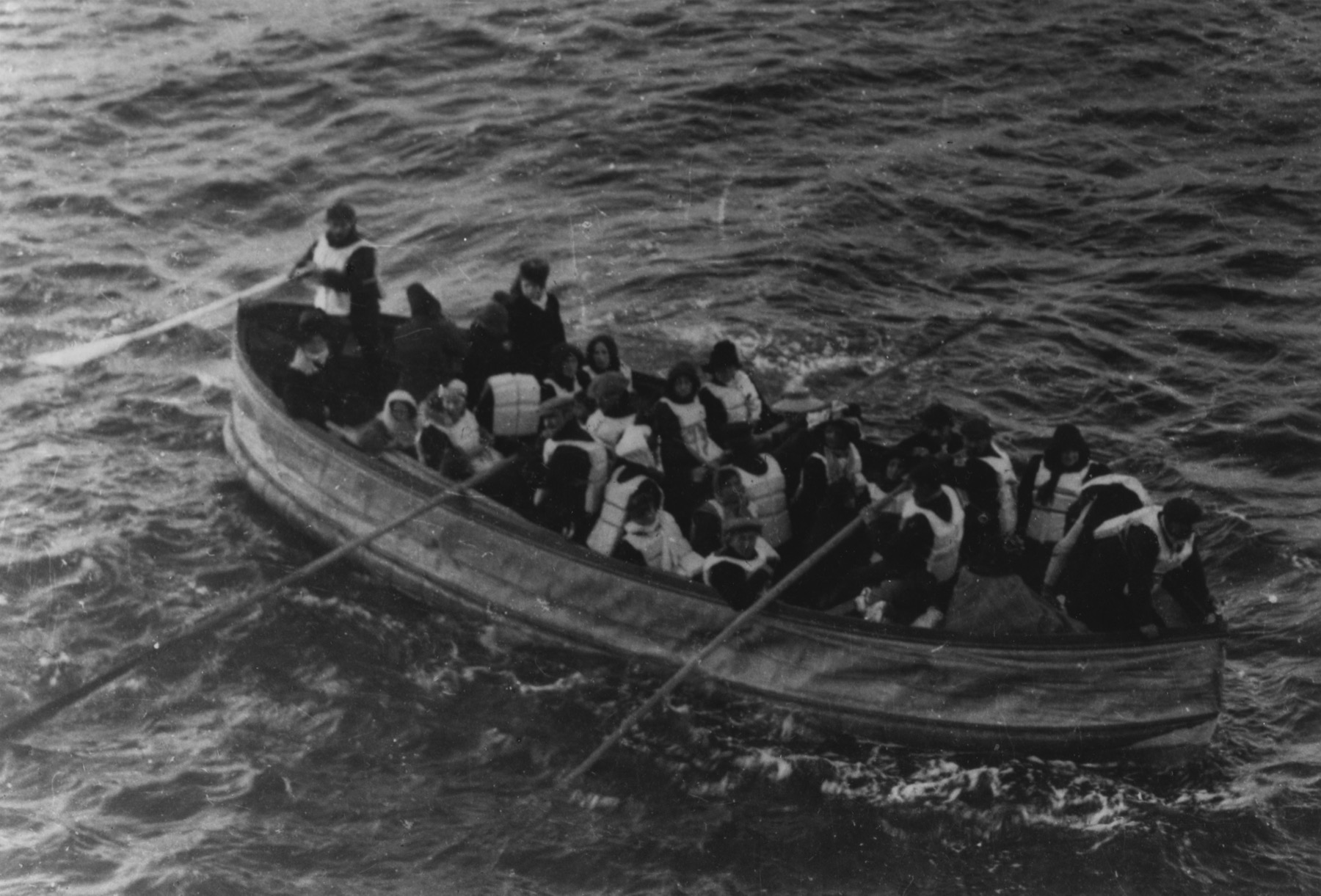

Wireless radio was powerful, but not automatic safety
A signal only saves people when someone hears it and acts.
Titanic did call for help. But wireless was not a magic shield. It depended on operators, routines, priorities, and nearby ships listening at the right time.
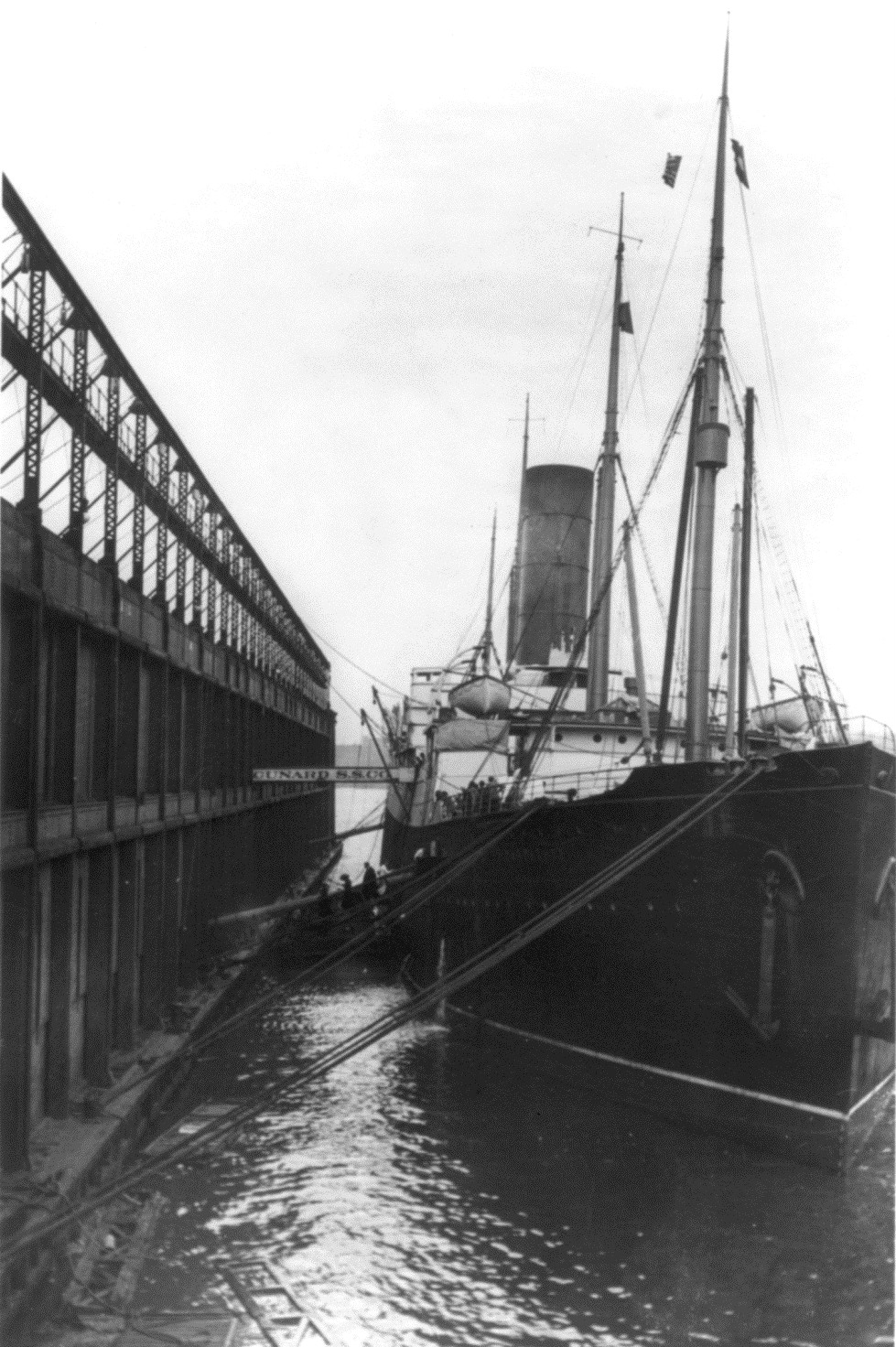
Carpathia received Titanic's distress signal at about 12:20 a.m. on April 15, immediately headed toward the liner, and was roughly 58 nautical miles away. The National Archives adds that Carpathia's wireless operator, Harold Cottam, was still wearing his headphones while preparing for bed. He alerted the bridge, and Captain Arthur Rostron turned Carpathia toward the disaster. [S7][S8]
SOLAS 1914 turned that weak point into a rule. IMO explains that Chapter V, Radiotelegraphy, Articles 31-38, included a requirement for a continuous watch on radio frequencies during navigation. The change was not only about having a radio set; it was about institutionalizing someone listening. [S3][S14]
Even the distress call sat in a transition between standards. The Science Museum notes that CQD, the Marconi Company distress signal, was still widely used on Titanic's voyage even though SOS had entered international use. Titanic's calls therefore belonged to a safety network that was still standardizing itself. [S10]
Captain Arthur Rostron, describing his checks as Carpathia raced toward the scene. [S1]
Lifeboatsenough capacityfillinglaunch procedure
Wirelesslisteningprioritizationresponse
Warningsbridge awarenessroute decisionsspeed decisions
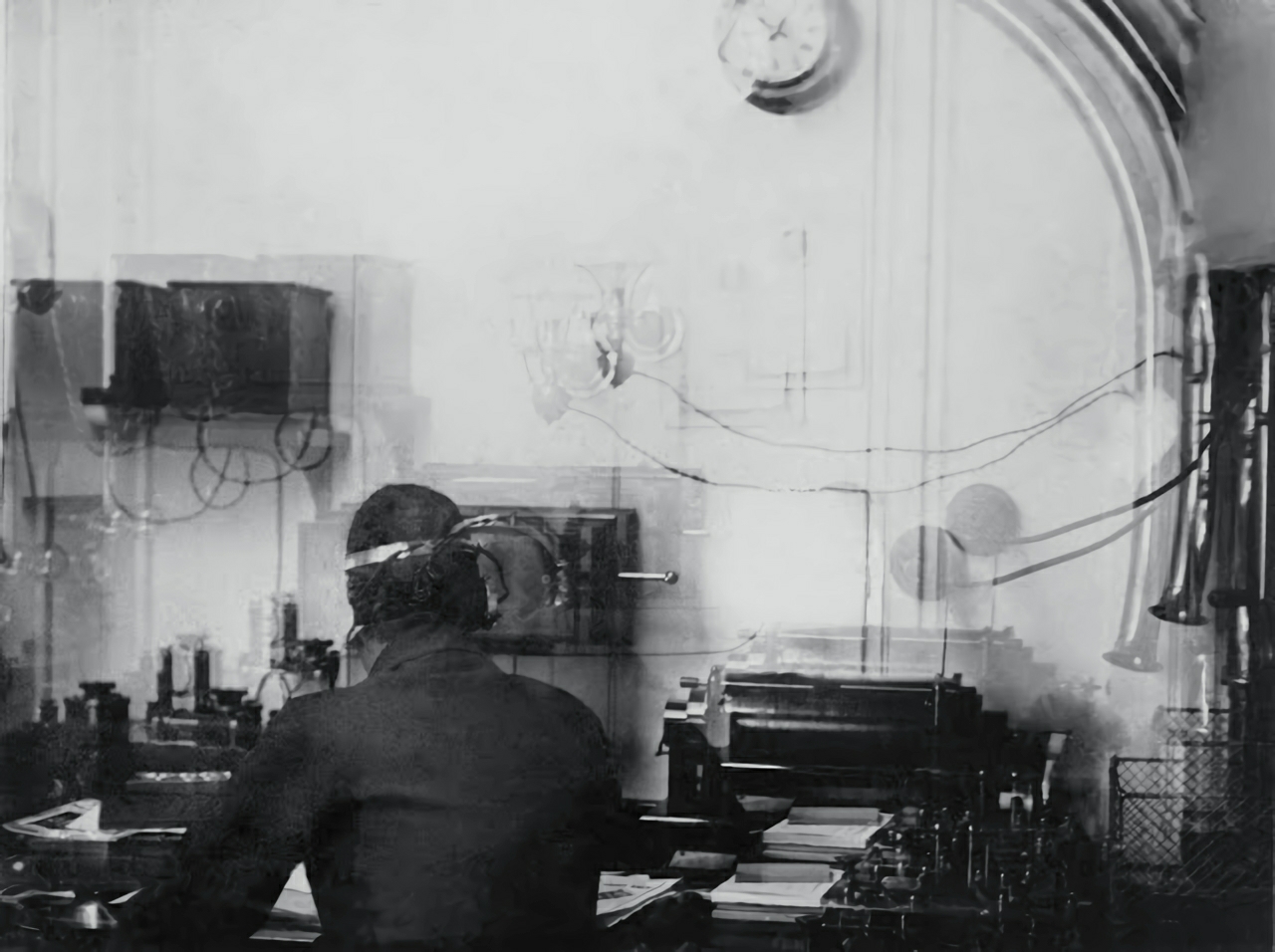

The ship that heard, and the ship that did not
Carpathia and Californian show why rescue needed a network.
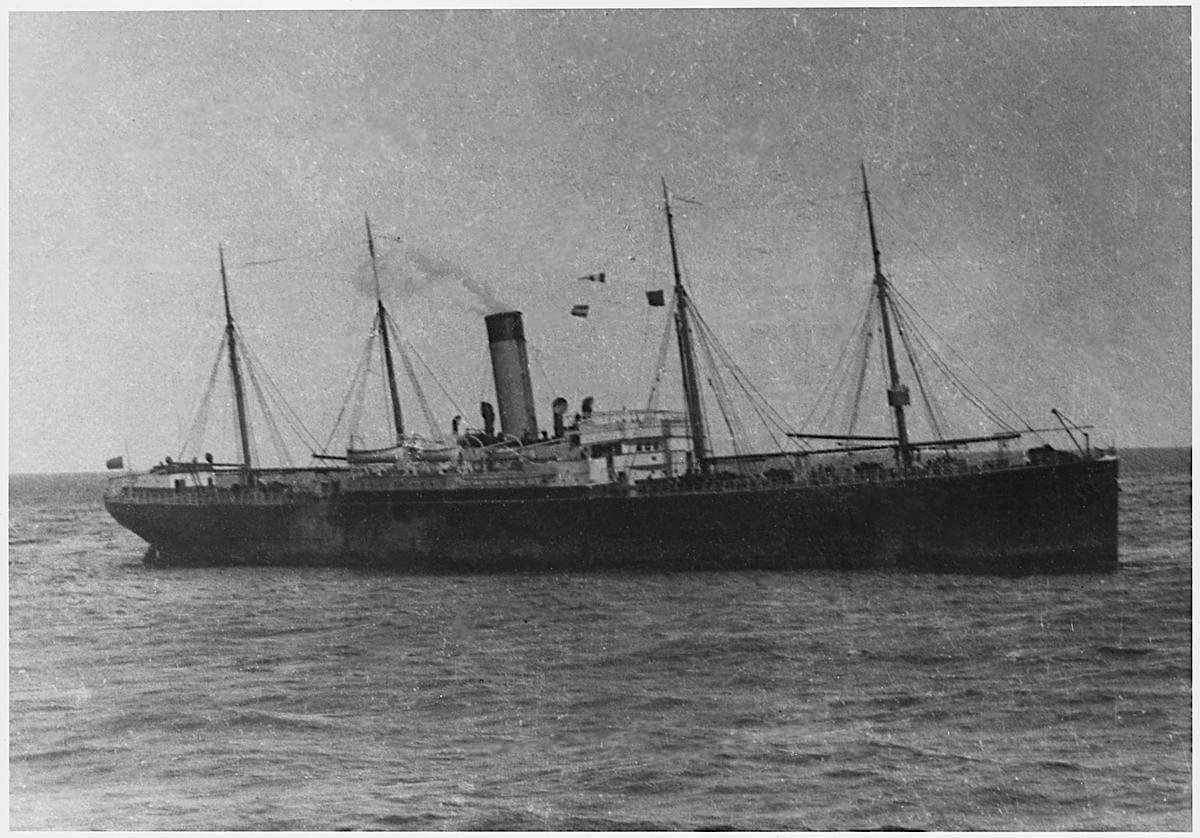
The Carpathia story becomes sharper when placed next to the Californian question. Californian was in the broader area that night and later became one of the most controversial parts of the Titanic investigations. Britannica notes that Californian had sent word that it was stopped after becoming surrounded by ice, and that its wireless was turned off for the night. Titanic was unable to contact a vessel seen nearby. [S8]
It is easy to turn Californian into a simple villain, but the more useful lesson is about systems. Carpathia shows the system working. Californian shows why the system needed to change.
The British inquiry's judgment on Captain Rostron keeps the contrast focused on readiness and response. [S2]
Carpathia heard and acted
Californian wireless/watchkeeping became an investigation issue


Famous passengers made the ship a symbol, but not the whole story
Titanic carried some of the most famous and wealthy people of its time, including John Jacob Astor IV, Benjamin Guggenheim, William Thomas Stead, Isidor and Ida Straus, Margaret "Molly" Brown, and White Star Line chairman J. Bruce Ismay. [S8]
These names matter, but they are not the whole story. The ship also carried third-class passengers whose names are less often remembered, people traveling toward work, family, or a new start. The disaster unfolded across class lines, but not equally across class experience.
Britannica notes that third class suffered the greatest loss among passenger classes, while also cautioning that simple claims about steerage passengers being deliberately prevented from boarding lifeboats have been largely dispelled. The reality was more complicated: late awareness, refusal to leave family, and the difficulty of navigating the complex ship from lower levels all mattered. [S8]
First class passengers about 62% saved203 of 325
Second class passengers about 41% saved118 of 285
Third class passengers about 25% saved178 of 706
British inquiry figures, rounded for display. The chart shows unequal outcomes, but not a single-cause explanation for individual evacuation paths. Source: S2.

The movie most people remember
For many people today, the word Titanic first brings up James Cameron's 1997 film. That is not a bad thing: the film made the disaster feel close to people who might never read an inquiry report.
But the film is not the same thing as the history. Britannica describes the 1997 film as a romantic adventure written and directed by James Cameron, starring Leonardo DiCaprio and Kate Winslet as doomed lovers. It also notes that the film uses real historical figures while much of the plot centers on the fictional romance between Jack and Rose. [S9]
The movie is a powerful doorway into Titanic. The reports show what lies behind that doorway: not only romance and spectacle, but a safety system that failed under stress.
That contrast matters here. Screen drama naturally searches for villains, heroes, and decisive moments; the investigation record points to something quieter and harder to see, a chain of mismatched rules, routines, assumptions, and responses.
The investigations did not find one simple cause
After Titanic sank, official investigations examined many questions: speed in an ice region, ice warnings, lifeboats, underfilled boats, wireless, nearby ships, and how class and ship layout affected evacuation.
The U.S. Senate reference page says the hearings involved 82 witnesses and covered issues including ignored iceberg warnings, inadequate lifeboats, speed, nearby ships failing to respond to distress calls, and the treatment of passengers of different classes. [S1]
The British inquiry concluded that the loss of Titanic was caused by collision with an iceberg, brought about by excessive speed in the circumstances. But it also answered that Titanic was properly constructed and adequately equipped for Atlantic service when it left Queenstown, while recommending that lifeboat and raft accommodation should be based on the number of people intended to be carried, not tonnage. [S2]
What changed after Titanic
The result was not one new gadget. It was a change in safety thinking.
After the disaster, the idea that lifeboat capacity should relate to the number of people on board became harder to ignore. Wireless communication could no longer be treated only as a convenience or commercial service. Ice danger in the North Atlantic needed monitoring and shared warnings.
SOLAS stands for the International Convention for the Safety of Life at Sea. The International Maritime Organization says the loss of Titanic gave major impetus to international rules for safety of life at sea, and that the 1914 SOLAS Convention was signed by 13 countries on January 20, 1914. The 1914 text included the North Atlantic ice patrol in Chapter III, radio watchkeeping in Chapter V, and life-saving appliances in Chapter VI. [S3][S14]
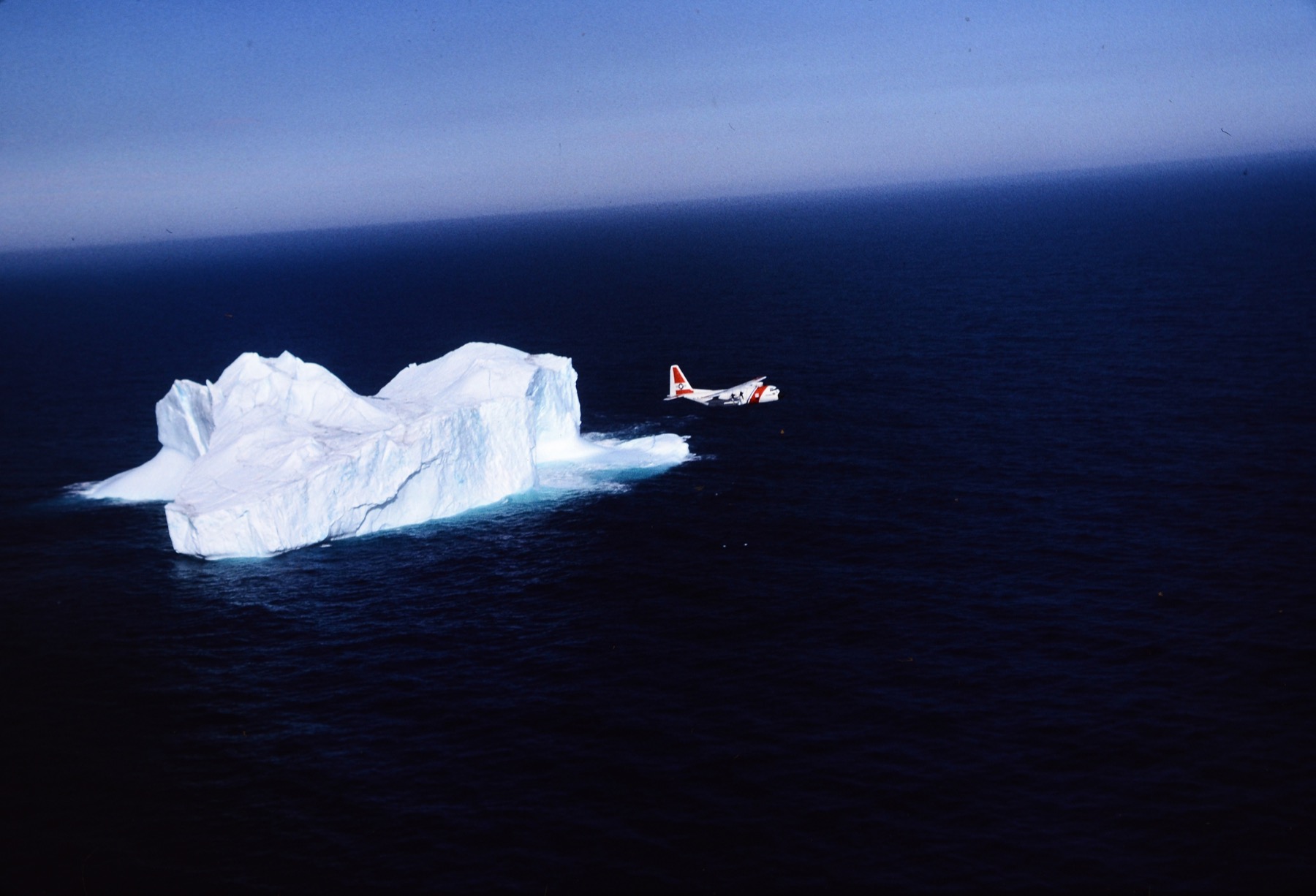
The U.S. Coast Guard Navigation Center says Titanic's sinking drove international action on iceberg danger and that the 1914 SOLAS conference formally inaugurated ice patrol services. Today, the International Ice Patrol's mission is to monitor iceberg danger in the North Atlantic and provide warning products to the maritime community. [S5][S6]
That did not mean SOLAS 1914 took effect smoothly as international law. IMO notes that the outbreak of World War I kept it from entering into force as planned in 1915, although many provisions were adopted by individual nations. The system changed, but implementation took time. [S3]
Before
- lifeboat assumptions tied too much to ship/tonnage and transfer assumptions
- wireless not yet robust continuous safety network
- ice danger handled ship-by-ship
After
- lifeboat expectations move toward people aboard
- continuous radio watch is written into rules
- International Ice Patrol is formalized
- SOLAS becomes international safety framework

More to explore
- The Ship That Heard Titanic, and the Ship That Didn't — Carpathia, Californian, wireless watchkeeping, and why rescue networks need people listening.
- Why Didn't Titanic Have Enough Lifeboats? — lifeboat rules, underfilled boats, evacuation assumptions, and the shift from ship-based to people-based safety capacity.
- How Accurate Is Titanic? — a film-and-history article that separates fictional drama from historical structure without turning the site into movie trivia.
The real lesson
Titanic is often remembered as the ship that was said to be unsinkable. But the more useful lesson is not about arrogance alone.
A legal requirement can still be too weak for reality.
A big ship can still need more lifeboats. A radio can still fail if nobody is listening. A warning can still fail if it does not change a decision. A nearby ship can still be useless if it is not part of a working rescue network.
The ship did not just reveal the danger of ice. It revealed the danger of believing that because a rule exists, the people under that rule are safe.
Sources
Source list
- S1 United States Senate - Titanic Disaster Hearings: The Official Transcripts of the 1912 Senate Investigation
- S2 Great Britain / Wreck Commissioner's Inquiry; scan hosted by Internet Archive - Loss of the Steamship Titanic: Report of a Formal Investigation
- S3 International Maritime Organization - Surviving Disaster: The Titanic and SOLAS
- S4 International Maritime Organization - Surviving Disaster – The Titanic and SOLAS graphic
- S5 U.S. Coast Guard Navigation Center - International Ice Patrol - About Us
- S6 U.S. Coast Guard Navigation Center - International Ice Patrol History
- S7 U.S. National Archives - They Said It Couldn’t Sink
- S8 Encyclopaedia Britannica - Titanic: Maiden voyage
- S9 Encyclopaedia Britannica - Titanic: film by Cameron [1997]
- S10 Science Museum - Titanic, Marconi and the wireless telegraph
- S11 U.S. Naval Institute Naval History Magazine - A Titanic Centennial
- S12 Great Britain Court to Investigate Loss of Steamship Titanic; Project Gutenberg text - Loss of the Steamship Titanic
- S13 Titanic Inquiry Project transcript - United States Senate Inquiry: Testimony of George F. Crowe
- S14 International Maritime Organization Knowledge Centre - SOLAS
- S15 U.S. House of Representatives: History, Art & Archives - Congressional Gold Medal Recipients
- S16 Smithsonian Institution - Captain Arthur Henry Rostron Medal sculpture / photographed by De Witt Ward
Image licenses
Image source notes
Detailed image metadata lives at stories/titanic-safety-rules/image-sources.json.
- rms-titanic-departing-southampton Francis Godolphin Osbourne Stuart - Public domain / Creative Commons Public Domain Mark 1.0
- titanic-lifeboat-carpathia-rescue J.W. Barker, Carpathia passenger, credited in The Sphere - Public domain
- titanic-marconi-wireless-room Francis Browne - Public domain
- rms-carpathia Unknown author - Public domain, with Commons UK/US public-domain tags
- ss-californian Louis Ogden, per Commons metadata - Public domain / Creative Commons Public Domain Mark 1.0
- carpathia-pier-54-1912 Bain News Service - Library of Congress / no known publication restrictions; public domain in the United States
- international-ice-patrol-c130-iceberg U.S. Coast Guard photo by Petty Officer 1st Class Brandon Brewer - Public domain / U.S. Coast Guard work
- titanic-boat-deck-plan Maxrossomachin - CC0 1.0 Universal Public Domain Dedication